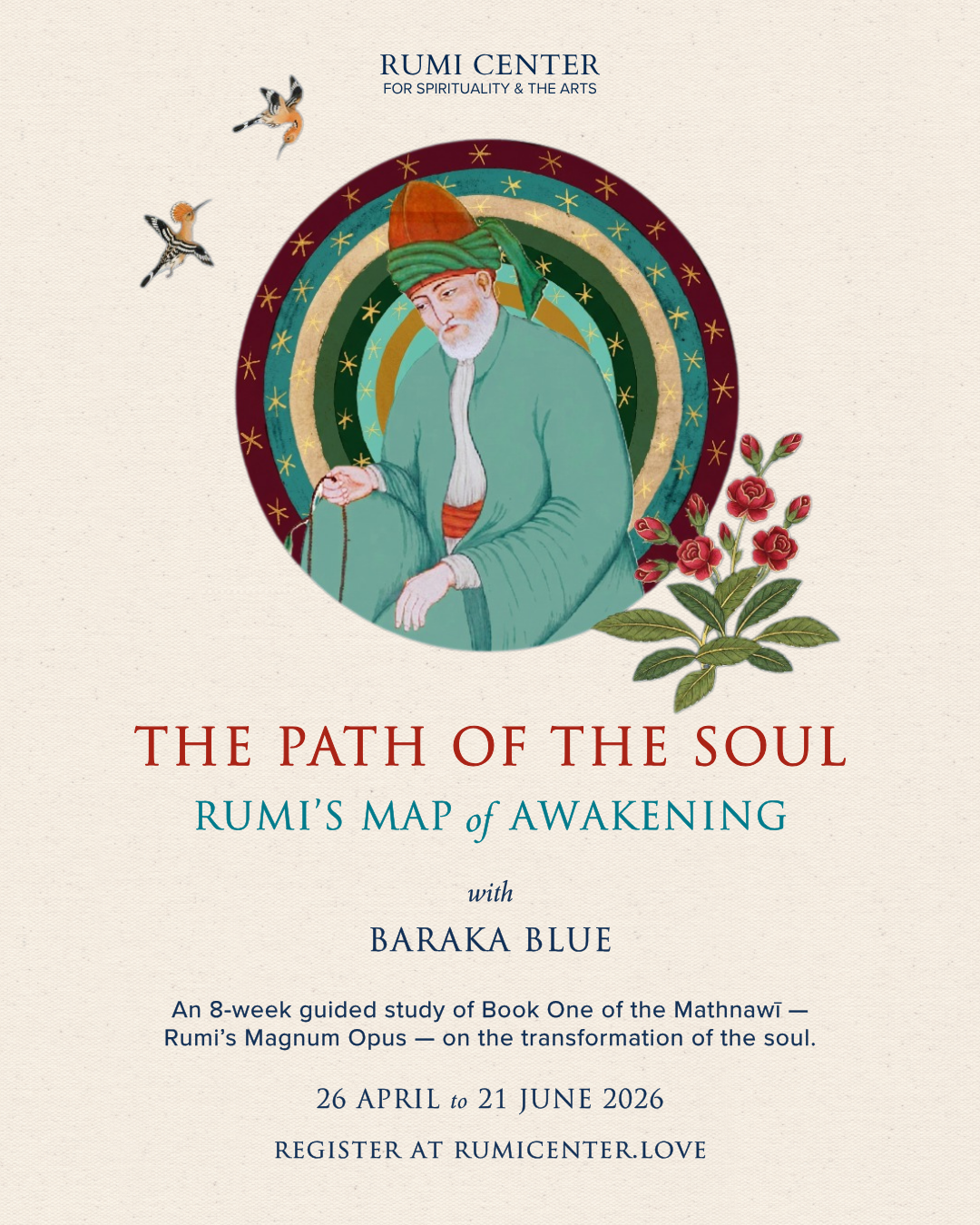
You’ll receive a weekly pre-recorded lecture (approximately 90 minutes) to watch at your own convenience, along with a PDF of the assigned reading from the Mathnawi for that week and journal prompts to support your study, reflection, and integration.
Week 1 - The Reed Flute & The King and the Handmaiden
We begin with the famous opening lines of the Mathnawi, the Song of the Reed, where Rumi introduces the soul’s longing for its divine source. These verses serve as a key to the entire work. We then explore the first great teaching story, The King and the Handmaiden, which Rumi calls “the essence of our state.” Through this story we uncover the difference between misplaced love and true love and the spiritual healing required for the soul to awaken.
Week 2 - The Lion and the Hare
In this celebrated story Rumi explores the nature of knowledge and discernment. Through the encounter between the lion and the clever hare, he reveals the difference between the partial intellect of the ego and the deeper wisdom of the Universal Intellect. The story also exposes one of the most dangerous traps on the spiritual path: the arrogance of thinking we already understand.
Week 3 - The Merchant and the Parrot
One of the most beloved stories of the Mathnawi, this discourse reveals the hidden cage of ego-identity. The parrot’s mysterious message contains one of Rumi’s most profound teachings about spiritual liberation. Through this story we explore the paradox that true freedom often requires a symbolic death of the false self.
Week 4 - The Bedouin and His Wife
The longest discourse in Book One unfolds as a series of interconnected teaching stories. Within it, Rumi exposes the subtle deceptions of the ego that can mislead even sincere seekers. Stories such as The Grammarian and the Boatman reveal how attachment to pride, intellect, or appearances can veil us from deeper truth.
Week 5 - The Lion, the Wolf, and the Fox
In this second lion story, Rumi presents a deeper stage of spiritual realization. By contrasting different responses to the lion, he illustrates the difference between ego-centered action and true surrender. The story becomes a powerful meditation on tawḥīd—the unity of all reality in the Divine.
Week 6 - The Mirror of the Heart
Through the story of Joseph and his friend, Rumi introduces one of the central symbols of Sufi spirituality: the heart as a mirror. The human heart has the capacity to reflect the light of reality—but it must first be polished. This week we explore how ego, distraction, and attachment cloud the heart and how spiritual practice restores its clarity.
Week 7 - Ali and the Enemy Warrior
In the final story of Book One, Rumi presents a powerful example of perfect sincerity and spiritual mastery. When Imam Ali faces his enemy in battle, an unexpected moment reveals the true meaning of ikhlāṣ—acting purely for the sake of God. This story reveals the culmination of the spiritual path and the character of the awakened soul.
Week 8 - Book One as a Map of Awakening
In our final session we step back and view Book One as a complete map of the soul’s journey. The stories we have studied reveal the stages of transformation from the ego’s illusions to the freedom of the awakened heart. We conclude by reflecting on how these teachings can guide our own spiritual lives and prepare us to explore the rest of the Mathnawi.